2026 Invest in What Works State Standard of Excellence Analysis
As part of the release of the 2026 Invest in What Works State Standard of Excellence, Results for America recognizes 15 leading states as the best in the nation at using evidence and data to deliver better results for residents. The State Standard assesses how states are increasing the impact of taxpayer dollars, focusing on the budgeting, grantmaking and service delivery systems that are critical for effective government. These 15 states have increasingly invested in evidence-based solutions that improve residents’ lives – expanding early childhood education, improving mental health outcomes, reducing recidivism and addressing other urgent challenges facing their communities.
The State Standard includes three levels of recognition. The honored states, by level, are:
- Platinum: California, Colorado, Maryland, Minnesota, New Mexico, Ohio, Rhode Island, Tennessee
- Gold: North Carolina, Oregon
- Silver: Connecticut, Michigan, New Jersey, Pennsylvania, Utah
Six states leveled up from last year, making significant improvements to how they invest public resources. California, Maryland, New Mexico, Ohio and Rhode Island advanced to Platinum, while Oregon advanced to Gold. These states made their budget and grant-making systems even stronger by setting measurable goals, directing more funding toward evidence-based programs and actively tracking whether public investments are delivering results.
Our 2026 Invest in What Works State Standard of Excellence evaluates all states against 12 criteria that set a roadmap for how states should build and use evidence and data to deliver better results for their residents. Forty-five states are represented in this year’s State Standard of Excellence.
Highlights from the 2026 Invest in What Works State Standard of Excellence
Investing in What Works
Our Invest in What Works State Standard of Excellence focuses on three crucial levers for evidence-based decision-making — budgeting, grantmaking and direct services.
Investing in What Works Through Budgeting
Maryland and New Mexico are recognized for their leadership in developing and implementing their evidence-based budgeting systems to improve outcomes for their residents. These two states are the first in the nation to complete all five evidence-based budgeting action steps outlined in Results for America’s evidence-based budgeting guide.
- Maryland is leading with transparency and accountability by including evidence indicators in the Governor’s FY 2027 Budget Highlights and summarizing FY 2027 enacted budget items that support evidence-based interventions. Additionally, Maryland incorporates evidence-based criteria within the State’s internal budget processes by requiring that any over the target enhancement requests are considered an evidence-based or evidence-building program, thereby driving state funds toward programs that deliver measurable results.
- New Mexico is advancing evidence-based policymaking by requiring agencies to justify budget expansion requests with evidence information and setting a target that at least 75 percent of programmatic spending be directed toward evidence-based programs for agencies participating in Program Inventories for Values, Outcomes and Transparency (PIVOT). Under the Accountability in Government Act, the state defines tiers of evidence and integrates them into budget guidance. The Legislative Finance Committee enhances transparency by publishing post-session reviews that track evidence-based items signed into law or vetoed, ensuring lawmakers and the public can see how evidence is shaping policy decisions.
Investing in What Works Through Direct Services
Across 14 states, a total of over $19 billion has been dedicated to evidence-based direct services, demonstrating bipartisan support for outcomes-focused government programs. Minnesota and Ohio are recognized for being leaders in evidence-based direct services to improve outcomes for their residents.
- Minnesota committed over $5 billion over three years to evidence-based programs supporting children and families. This includes $882 million invested in Universal School Meals to provide free school meals for students, and $387 million in the Child Care Assistance Program to improve affordability and supply of child care.
- Ohio allocated over $2 billion over three years to 17 evidence-based programs, including early childhood, behavioral health, human services and public safety. This includes funding for the Tobacco Use Prevention and Cessation program to prevent youth from smoking and help adults improve health outcomes by helping them stop using tobacco and nicotine products.
Investing in What Works Through Grantmaking
Thirty-four states have at least one grant program that defines and prioritizes evidence. Rhode Island and Tennessee are two states leading the way in evidence-based grantmaking, increasingly investing in programs proven to yield positive outcomes.
- Rhode Island recently approved the first statewide evidence-based competitive grantmaking policy in the country. Applying to executive branch solicitations of $500,000 or more, the policy requires agencies to define evidence using the Rhode Island Evidence Scale, ask applicants to document their evidence, and prioritize those interventions in scoring. With this policy, Rhode Island moved from isolated evidence-based grant programs to a systematic, statewide approach. This will help the state be clearer about what they are funding, why they believe it will work, and how they will learn from the results. Even more importantly, we expect this policy will lead to better outcomes for Rhode Islanders.
- Tennessee committed over $555 million across 6 evidence-based programs over three years, including for the State AmeriCorps grant program administered by Volunteer Tennessee and Community Grants administered by the Tennessee Opioid Abatement Council to combat the opioid epidemic.
States that define and prioritize evidence of effectiveness in grant programs can continue to nominate their programs by emailing states@results4america.org. Approved nominations will be included in future State Standards of Excellence. More examples of evidence-based grants can be found in our State Evidence-Based Grantmaking Guide.
2026 Criteria Analysis
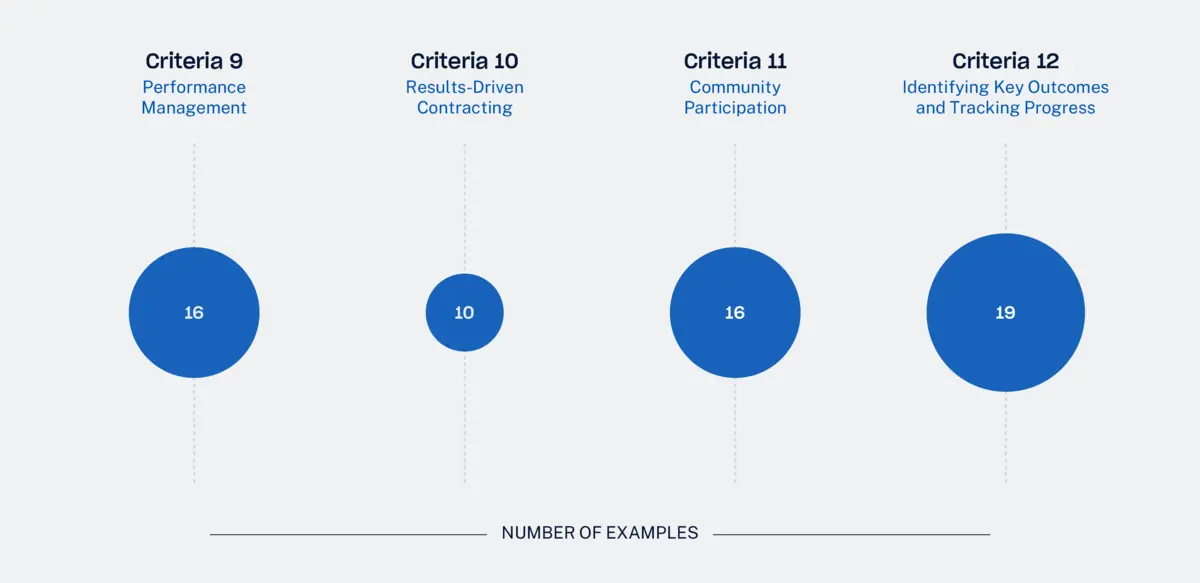
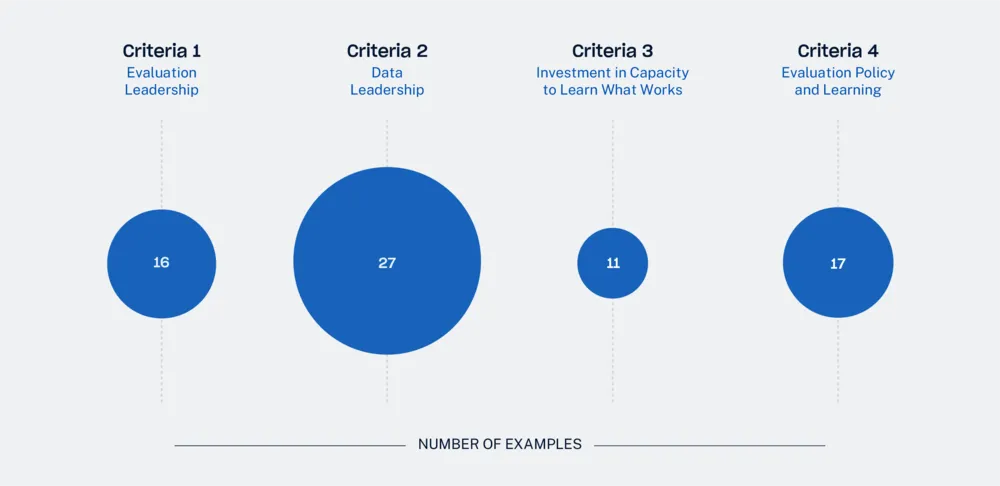
The chart below shows the number of states featured and the leading example for each criterion in 2026.
These states are leading the way:
1. Evaluation Leadership – Tennessee
2. Data Leadership – Ohio
3. Investment in Capacity to Learn What Works – Colorado
4. Evaluation Policy and Learning – North Carolina
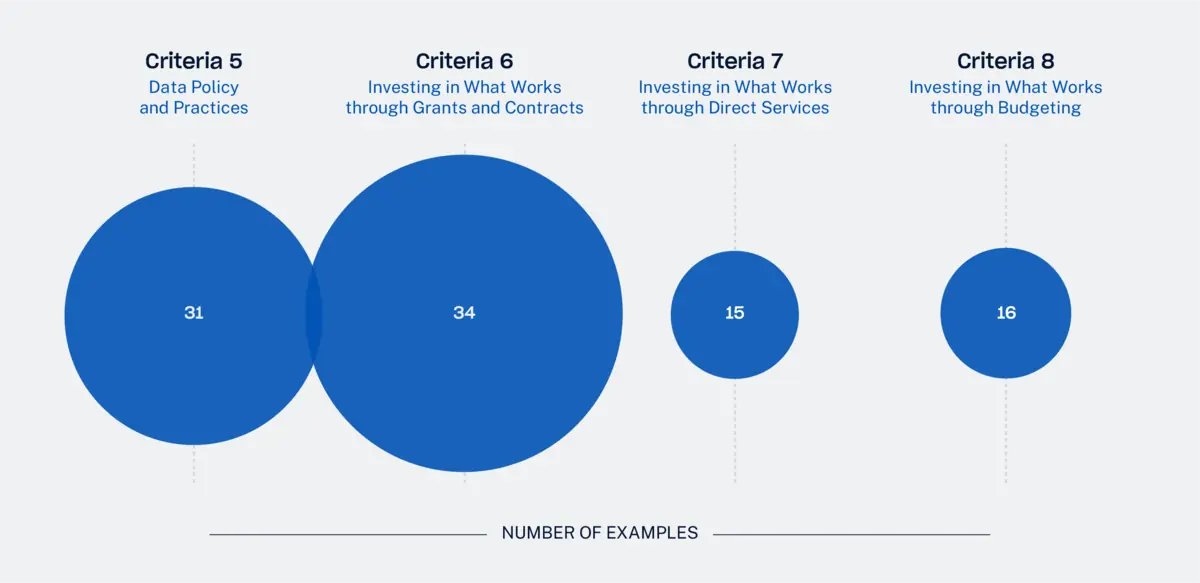
5. Data Policy and Practices – California
6. Investing in What Works through Grants and Contracts – Rhode Island
7. Investing in What Works through Direct Services – Minnesota
8. Investing in What Works through Budgeting – New Mexico
9. Performance Management – Oregon
10. Results-Driven Contracting – Maryland
11. Community Participation – Utah
12. Identifying Key Outcomes and Tracking Progress – Pennsylvania